
How to Determine Your Book Genre: The Definitive Guide
Novel Nest Publisher
December 22, 2025
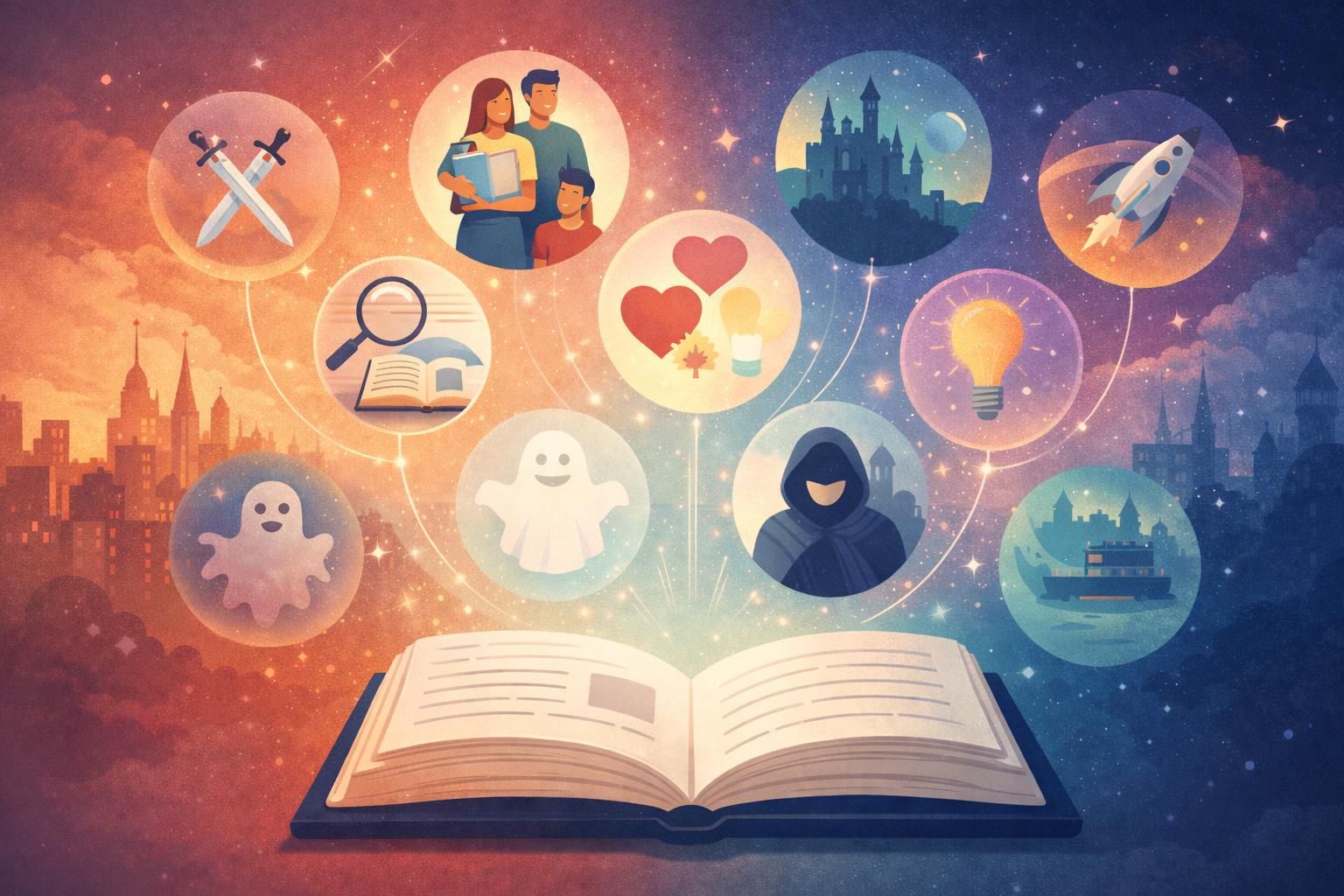
If you’ve ever sat down to write a book and wondered, “What genre am I even writing?”, you’re not alone. Choosing the right genre is one of the most important early decisions you’ll make as an author. It shapes your audience, your marketing approach, and even the expectations publishers bring to your manuscript. Whether you’re working with a professional book publishing team or writing solo, understanding your genre creates clarity and direction.
Let’s break it all down in a simple, conversational way.
Start With Age Category
Before you choose a genre, you need to choose who you’re writing for. Age category determines tone, complexity, themes, and even book length. Here’s the big three:
1. Middle Grade (Ages 8–12)
Think adventure, humor, friendship, and discovering identity, but without heavy romance or graphic content.
Common examples: Percy Jackson, Wonder.
Middle Grade tends to use simpler language, shorter chapters, and lots of heart. If your story focuses on school, magic, solving small mysteries, or dealing with family changes, this might be your category.
2. Young Adult (Ages 13–18)
YA is vibrant, emotional, and full of self-discovery. Romance is allowed (and popular), but themes should still be appropriate for teens.
Popular themes: identity, rebellion, first love, belonging, friendships, trauma, and growth.
YA continues to dominate the market; in fact, YA sales have grown significantly, with one report showing over 40% of YA readers are actually adults, proving just how universal this category has become.
3. Adult (18+)
If your story tackles mature topics, deeper themes, or nuanced relationships, it likely fits here. Language can be more complex, pacing varies widely, and genres stretch from literary fiction to hardcore thrillers.
Consider Your Setting
Setting gives your genre a home. It anchors your story in a time and place.
Ask yourself:
- Is it contemporary or historical?
- Earth-based or otherworldly?
- Rural, urban, or futuristic?
For example:
- A romance set in 1800s London leans toward historical romance.
- A thriller set on Mars? That’s a sci-fi thriller.
- A family drama in a quiet midwestern town fits contemporary women’s fiction.
Setting plays a silent but powerful role in shaping your genre identity.
Examine Your Prose Style
Your writing style often dictates genre more than you expect.
Literary Fiction
If your prose is poetic, theme-driven, and character-focused, you may be leaning toward literary fiction. These books take their time and often dive deep into emotion or introspection.
Upmarket Fiction
This one sits beautifully between literary and commercial. Upmarket fiction features strong writing and voice, but with a compelling plot. If your book has book-club vibes, it might be upmarket.
Commercial Fiction
Love fast-paced plots and bingeable storytelling? You’re in commercial fiction territory. These books appeal to a wide audience and often dominate bestseller lists.
If you’re working with a professional book publishing company, they’ll often help you identify where your prose fits.
Common Fiction Genres
Most novels fall into one of these core genre groups. Explore them and see where your story feels at home.
- Romance: Central story = love. Includes everything from sweet romance to spicy reads and romantic suspense.
- Women’s Fiction: Focuses on a woman’s emotional journey, personal challenges, and relationships. The story isn’t driven by romance, though romance can appear.
- Mystery: A puzzle, a crime, or a secret sits at the center of the story. Readers expect clues, red herrings, and a satisfying solution.
- Thriller: High stakes. Adrenaline. Danger. The pacing is fast, and the stakes escalate quickly.
- Horror: Your job is to scare the reader, whether through psychological terror, monsters, or atmospheric dread.
- Sci-Fi: Technology, future concepts, space travel, time manipulation—sci-fi explores possibilities. Your world-building must follow logical rules.
- Fantasy: Magic systems, mythical creatures, invented worlds, or supernatural elements. Fantasy ranges from epic to urban to dark.
If you plan to partner with an ebook writing company, they’ll usually help categorize your story within the right genre lane based on these elements.
Use Your Genre Template
Here’s a simple template to help you pinpoint your genre once and for all.
- My Audience Age Group: (Middle Grade, Young Adult, Adult)
- My Setting: (Contemporary, Historical, Futuristic, Earth-based, Otherworldly, etc.)
- My Prose Style: (Literary, Upmarket, Commercial)
- My Primary Genre: (Romance, Mystery, Thriller, Sci-Fi, etc.)
- Additional Elements/Secondary Genres: (Romantic suspense, sci-fi thriller, upmarket family drama, etc.)
Example:
- Age Category: Young Adult
- Setting: Dystopian future city
- Prose Style: Commercial
- Primary Genre: Sci-Fi
- Secondary Genre: Romance
Boom, you’ve got a YA sci-fi romance.
Why Genre Matters for Marketing & Publishing
Genre isn’t just a creative decision; it’s a business decision. Publishers, agents, and bookstores rely on genre to know where your book belongs. Even readers depend on genre to know what experience they’ll get.
According to recent industry data, over 80% of book sales occur because readers specifically search by genre. That’s huge, and shows why choosing the right genre boosts discoverability.
If you ever plan to work with a professional book publishing company, having a defined genre makes collaboration smoother, editing more accurate, and marketing more strategic.
Conclusion
Determining your book genre doesn’t need to feel overwhelming. Start with the basics, audience age, setting, prose style, and then layer in genre until everything clicks. Your book does belong somewhere, and once you find that place, your writing, marketing, and publishing journey will feel so much clearer.
Whether you’re writing on your own or working with an ebook writing company, knowing your genre is the first step toward publishing success.