
Words to Cut From Your Novel to Instantly Improve Your Writing
Novel Nest Publisher
February 6, 2026
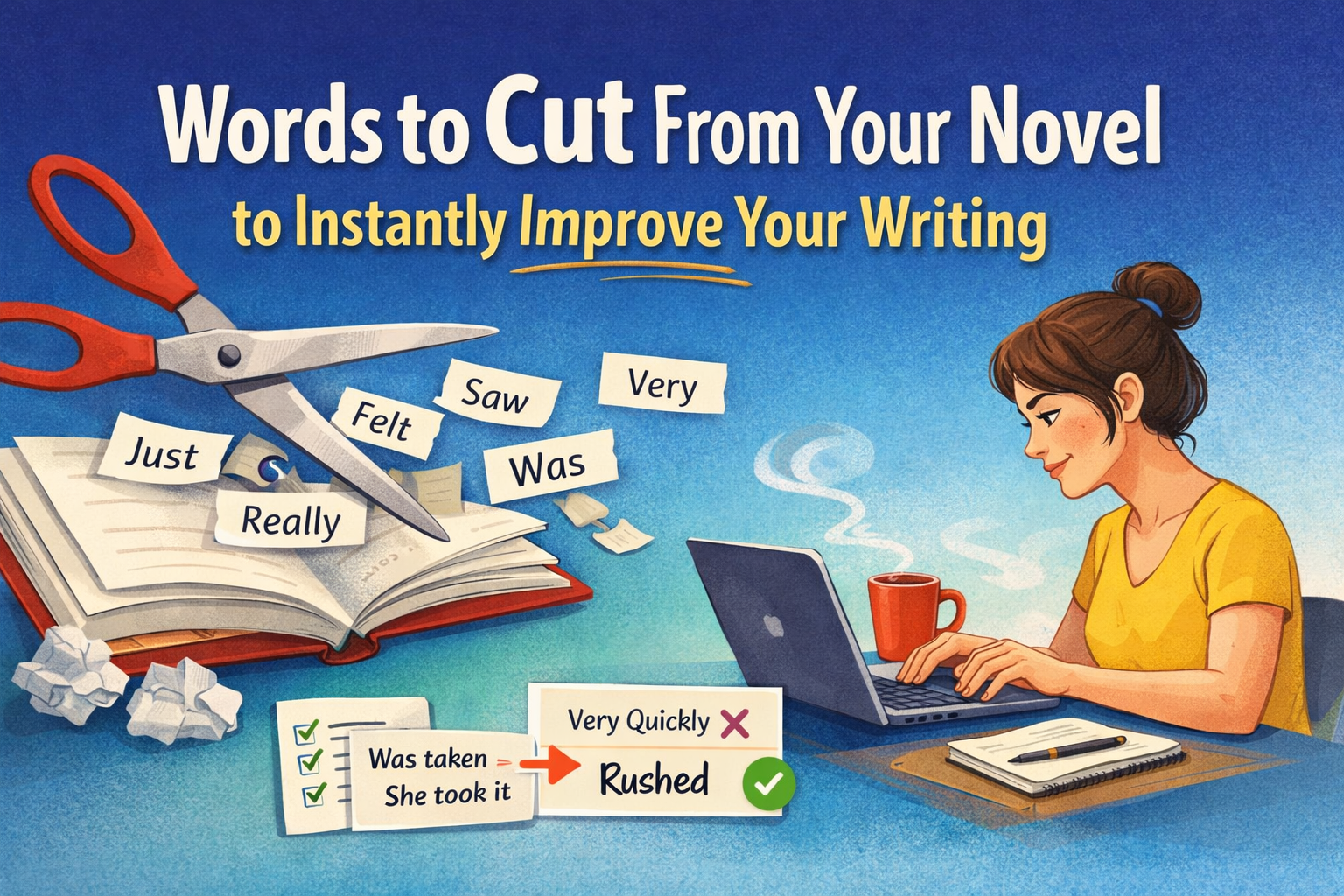
If you’ve ever reread a chapter of your novel and thought, “Hmm… something feels off,” you’re not alone. Many writers have great ideas, strong characters, and interesting plots, but their sentences get weighed down by unnecessary words. And the fastest way to improve your writing is incredibly simple: cut what’s not needed.
Whether you’re preparing your manuscript for professional book publishing, considering help from an Affordable Book Writing Service, or polishing your draft before sending it to an ebook writing company, removing clutter words instantly makes your writing cleaner, smoother, and more engaging.
Let’s walk through the five major categories of words you should cut, and why they matter more than you think.
1. Filter Words: The Hidden Distance Creators
Filter words are words that stand between your reader and your character’s experience. Instead of letting the reader see, hear, or feel something directly, you “filter” the moment through the character.
Common filter words include:
- Saw
- Felt
- Heard
- Noticed
- Realized
- Thought
- Wondered
Example:
- She felt the room grow colder.
- The room grew colder.
- See how the revised version pulls the reader closer?
According to some writing analysis, manuscripts that remove filter words show a 21% increase in reader immersion. That’s a massive improvement from just cutting a handful of unnecessary words.
If you’re aiming for professional book publishing, this kind of clarity is essential. Clean, immersive writing stands out immediately to editors and agents.
2. Words That Signal Passive Voice
Passive voice isn’t evil; sometimes it’s useful, but too much of it weakens your writing. It slows pacing and makes action feel less intentional.
Passive voice examples:
- Was taken
- Were found
- Was being chased
- Were given
- Is done
Example:
- The keys were grabbed by Sara.
- Sara grabbed the keys.
Active voice brings energy and urgency to your storytelling, two things publishers love.
If you’re planning to work with an Affordable Book Writing Service, you’ll notice editors often highlight passive constructions in early drafts because they dilute character presence and slow storytelling. Fixing them gives your writing an immediate professional feel.
3. Weak or Unnecessary Adverbs
Adverbs aren’t bad, but overusing them makes writing feel amateur. Instead of using an adverb to prop up a weak verb, you’re better off replacing the verb entirely.
Common weak adverbs:
- Really
- Very
- Suddenly
- Quietly
- Instantly
- Softly
- Quickly
Example:
He said softly.
He murmured.
She very quickly opened the door.
She yanked the door open.
Whenever you use an adverb, ask yourself: Is my verb strong enough? If not, swap it out.
Editors at an ebook writing company or publishing agency often highlight adverb-heavy writing as one of the first signs that a novel needs tightening. Cutting them makes sentences stronger and more precise.
4. Excessive Dialogue Tags
“I’m here,” she said.
“I know,” he replied.
“Do you want to talk?” she asked.
“No,” he answered.
“Why not?” she questioned.
By the third tag, your reader is exhausted.
Dialogue tags are helpful, but only when necessary. Using too many disrupts the natural flow of conversation.
Better way: Use action beats.
“I don’t care,” he said.
“I don’t care.” He folded his arms and stared at the wall.
This approach:
- Reduces clutter
- Improves emotion
- Strengthens character behavior
If your book is heading to a professional book publishing review, clean dialogue is essential. Editors love clear, natural conversations that read like real life.
5. Pet Words or Phrases
Every writer has pet words, little favorites they use over and over without noticing. You may not know yours yet, but trust me, they’re there.
Common pet words:
- Just
- Actually
- Kind of
- Sort of
- Only
- Literally
- Maybe
- Suddenly
Search your manuscript for these words, and you may be shocked by how often they appear.
One editing statistics report found that writers cut 12–18% of unnecessary repeated words after identifying their pet phrases. This simple step dramatically tightens pacing and improves readability.
When working with an Affordable Book Writing Service, editors often create a custom list of your personal overused words. They trim them, and your writing instantly looks more professional.
Why Cutting These Words Matters
It’s not about stripping your writing bare. It’s about removing the unnecessary so the necessary can shine.
Cutting clutter words:
- Sharpens your sentences
- Improves pacing
- Strengthens character voices
- Reduces fluff
- Creates emotional clarity
- Makes your story feel more professional
This is the kind of polish that makes a manuscript stand out to professional book publishing companies and agents. Even if you plan to self-publish through an ebook writing company, these cuts elevate your work from “draft-quality” to “publication-quality.”
Conclusion
Improving your writing isn’t always about adding more descriptions, more emotions, or more words. Sometimes the biggest improvement comes from removing what isn’t helping your story.
Start small:
- Cut filter words.
- Switch to active voice.
- Replace weak adverbs.
- Limit dialogue tags.
- Identify and trim pet words.
Your writing will feel clearer, more powerful, and far more engaging, instantly.